Are you downsizing in Monroe and wondering what to do with a lifetime of belongings?
You are not alone. Downsizing can feel emotional, exhausting, and overwhelming. The hardest part is often deciding what to keep, donate, sell, or store.
The good news? You do not have to make every decision in one day. With a simple plan, you can make steady progress and create room for your next chapter.
At NorthStar Storage Group, we provide flexible self storage units for Monroe homeowners and families. Here is how to make your downsizing process more manageable.
1. Start with a room-by-room plan
Avoid tackling the entire house at once. That approach can quickly become too much.
Instead, work through one room or area at a time.
Try this order:
- Start with a low-emotion area, such as a pantry, linen closet, or utility room.
- Move to bedrooms, offices, and living areas.
- Save highly sentimental spaces for later.
- Finish each room before moving to the next.
Set aside a few hours for each session. Take breaks. Invite a family member to help when you need support.
A room-by-room approach gives you a clear stopping point. It also makes progress easier to see.

2. Create four simple categories
As you sort, create four clearly marked areas:
- Keep: Items that belong in your new home.
- Donate: Useful items you no longer need.
- Sell: Furniture, collections, tools, or other items with resale value.
- Store: Belongings you want to keep but do not need right now.
Do not create a “maybe” pile that grows forever. If you are unsure, place the item in the store category temporarily. Then set a date to review it again.
Ask yourself:
- Do I use this item?
- Do I truly love it?
- Does it fit my new home?
- Do I own a duplicate?
- Would I buy this again today?
- Am I keeping it because I want it or because I feel guilty?
Be honest and kind to yourself. Letting go of an item does not erase the memory connected to it.
3. Measure your new space first
Before choosing furniture or renting a storage unit, measure your new home.
Record the dimensions of:
- Bedrooms
- Living areas
- Closets
- Garages
- Cabinets
- Hallways and doorways
Then measure the furniture you plan to take with you. This step can prevent a common problem: moving large furniture twice because it does not fit.
Create a simple floor plan. Mark where essential furniture will go. Anything that does not fit comfortably can move into the donate, sell, or store category.
If you are moving into assisted living or a smaller apartment, ask for a floor plan from the community or property manager. Knowing your available space will make decisions much easier.
4. Decide what genuinely needs storage
Storage can give you breathing room. It should not become a place for items you will never use again.
Good candidates for storage include:
- Seasonal decorations
- Holiday dishes and serving pieces
- Family heirlooms
- Furniture for a child or grandchild’s future home
- Tools and household equipment
- Collectibles you still value
- Business records and important documents
- Furniture you plan to use in a future home
- Items needed during a transition between homes
Be more cautious with items that are damp, damaged, or highly sensitive to temperature and humidity.
Do not store:
- Perishables or food
- Wet clothing, rugs, or furniture
- Hazardous chemicals
- Flammable materials
- Items that are leaking or contaminated
- Anything prohibited by your storage agreement
- Belongings you are keeping only because you feel pressured
NorthStar Storage Group offers standard self-storage units and open-air vehicle storage. We do not offer climate-controlled storage. For especially sensitive photographs, artwork, electronics, documents, or antiques, consider whether a climate-controlled option is more appropriate.
5. Give sentimental items special attention
Sentimental belongings often take the longest to sort. Slow down in these areas.
Start by photographing meaningful items. A photo can help you preserve the memory even if you decide not to keep the physical object.
You can also:
- Create one memory box for each family member.
- Digitize photographs and important papers.
- Keep a small selection from a larger collection.
- Ask children or relatives whether they want specific items.
- Write down the story behind special belongings.
- Display your favorite pieces in your new home.
Set a limit for memory boxes. A defined space makes it easier to choose the items that matter most.
Remember this: You are preserving the meaning, not necessarily every object.
6. Set a realistic downsizing timeline
Downsizing usually takes longer than expected. Give yourself enough time to make thoughtful decisions.
A practical timeline might look like this:
Six to eight weeks before moving
- Measure your new space.
- Choose the furniture you will take.
- Reserve a storage unit if needed.
- Start with low-emotion rooms.
Four to six weeks before moving
- Sort bedrooms, closets, and offices.
- Schedule donations and pickups.
- Photograph sentimental items.
- Begin packing storage belongings.
Two to three weeks before moving
- Finish sorting.
- Sell or donate remaining items.
- Label storage boxes.
- Create your master inventory.
Moving week
- Pack daily essentials separately.
- Load storage items in a planned order.
- Keep important documents, medications, and valuables with you.
- Confirm that your new home is ready.
A slower timeline can reduce stress. It also gives family members time to claim items they genuinely want.
7. Involve family members early
Family decisions can become complicated when everyone waits until moving day.
Tell your family what you are sorting and when. Give relatives a clear deadline to choose items. After that date, move forward with donating, selling, or storing the rest.
Consider assigning tasks:
- One person sorts photographs.
- One person measures furniture.
- One person handles donations.
- One person creates the inventory.
- One person coordinates movers or transportation.
Keep the process respectful. Every family member may have different memories attached to the same item.
8. Pack for easy access later
Good packing protects your belongings and saves time later.
Use these tips:
- Choose sturdy boxes in similar sizes.
- Use small boxes for books and heavy items.
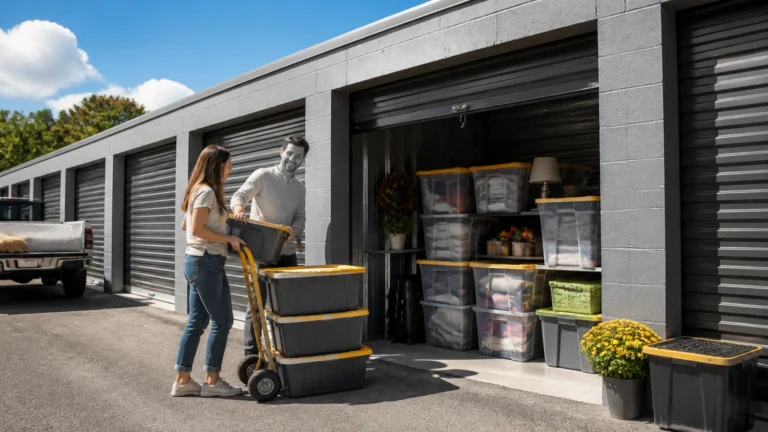
- Use clear bins when you need to see contents quickly.
- Wrap fragile items individually.
- Cover sofas, chairs, and mattresses with furniture covers or clean moving blankets.
- Keep boxes off the floor when possible.
- Do not overfill boxes.
- Leave a small amount of space at the top to prevent crushing.
Label every box on multiple sides. Include:
- Room
- Category
- Box number
- Short contents list
- Priority, such as “open first” or “holiday decor”
Keep a master inventory in a notebook or spreadsheet. Number each box and record its contents.
This small step can save you from opening ten boxes to find one photo album.

9. Organize the storage unit strategically
When you load your unit, think about what you may need first.
Place frequently needed belongings near the entrance. Keep seasonal decorations, documents, and family items easy to reach.
Use the back and upper areas for long-term storage. Leave a walkway through the unit. Avoid stacking boxes so high that they become unsafe to reach.
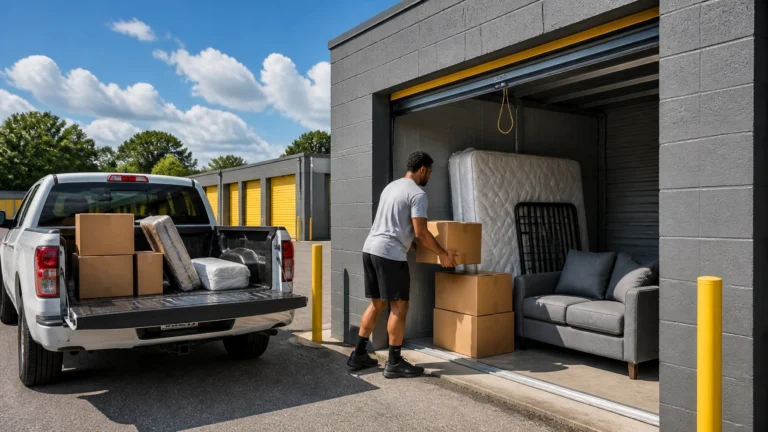
Drive-up access can make a major difference when you are moving furniture or many boxes. You can pull close to your unit, unload more efficiently, and reduce the number of trips.
If you need a larger space for furniture and household belongings, ask about large storage units. Your ideal size will depend on the amount of furniture, box count, and access space you need.
For additional planning ideas, review our guide to long-term storage for seasonal items and household belongings.
10. Choose flexible storage while plans change
Downsizing plans can change. A home sale may take longer than expected. A family member may claim furniture later. You may decide to move again.
That is why flexible, month-to-month leasing can be helpful. You get space while you make decisions without committing to a long lease before you are ready.
When comparing storage units near me, look for:
- Convenient location access
- Drive-up units
- High-security facility features
- Clean, well-maintained grounds
- Clear rental terms
- Flexible month-to-month options
- Unit sizes that match your belongings
You can learn more about our self-storage options in Monroe or explore our security features.
Make your next chapter feel lighter
Downsizing is a major change. You do not have to finish everything at once.
Start with one room. Make four categories. Measure your new space. Involve your family. Store only what you truly value or expect to use.
If you need residential storage units in Monroe, NorthStar Storage Group is here to help. We offer convenient storage options, drive-up access, high-security facilities, and flexible month-to-month leasing.
Visit us at 100 Martinez Dr., Monroe, LA 71203. Call (318) 433-4443, or visit northstarstoragegroup.com to learn more.
Let us help make your downsizing journey a little easier!